
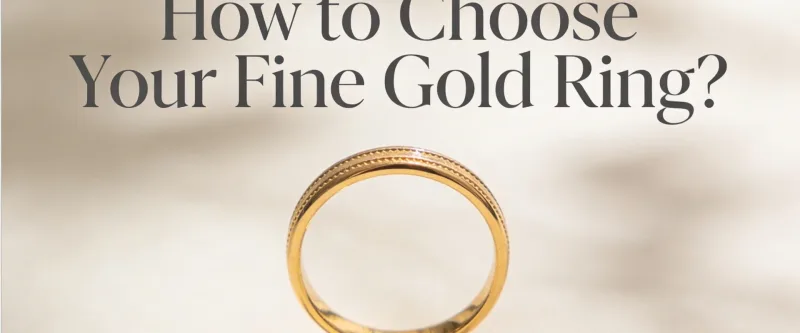
A fine gold ring is that piece of jewelry we wear every day without thinking about it, that ages with us and tells a story. But with yellow, white, and rose gold, it can be hard to choose. Here’s what you really need to know before you fall for one.
Yellow, White or Rose Gold: Which One Suits You Best?
Yellow gold remains the classic choice. Composed of 75% pure gold mixed with silver and copper, it radiates a warm glow that never goes out of style. Your grandmother wore it, your mother did too, and you will probably pass it down one day.
White gold, on the other hand, plays the modern card. Mixed with palladium and then coated with a layer of rhodium, it shines with a very chic silver luster. The downside? This rhodium layer wears off. Expect to visit the jeweler every two to four years to restore its original shine.
Rose gold is increasingly popular. Its romantic hue comes from a high dose of copper in the alloy. Bonus: it is more scratch-resistant than yellow gold and requires no special treatment. Over time, it can even develop a lovely patina that adds character.
Try the Wrist Test
Your skin often dictates the right choice. Warm, golden, or matte tones are illuminated by yellow or rose gold. These shades create a play of reflections that warm the face.
Fair skin with cool undertones generally prefers white gold. It brings freshness without being heavy.
The jeweler's trick? Try different rings on your wrist in daylight. The one that makes your skin glow is the right one. It seems simple, but it works every time.
18 Carats: The Right Compromise
In France, 18-carat gold (marked 750) represents the standard of quality. With 75% pure gold, it offers the best balance between strength and shine. For a fine ring you plan to wear daily, it's the ideal choice.
14-carat gold contains less pure gold (58.5%) but is slightly more shock-resistant. However, its appearance is less luminous. In French jewelry, 18-carat is preferred for its nobility and durability.
Forget 24-carat gold for a ring. Too soft, it deforms at the slightest impact. It's beautiful as a bar, but much less practical on the finger.
Stack, Mix, Dare
The real strength of a fine ring? It can be stacked. This stacking trend allows for unique combinations that change with your mood. You can mix yellow, white, and rose gold on the same finger without bad taste.
The secret: choose a dominant metal and add one or two accents. Three fine yellow gold rings plus one rose gold, for example. Or the reverse. The visual balance remains intact, and the style is asserted.
Textured models pair perfectly with smooth bands. A few small stones – a discreet diamond, a moonstone – add relief without falling into bling-bling.
How to Measure Your Finger Size for Buying a Fine Gold Ring?
To avoid unpleasant surprises, measure your finger before buying. A ring sizer remains the most reliable solution. You can find them at jewelers or online for a few euros. This small graduated ribbon wraps around your finger and gives you your exact size. Remember to slide it several times like a real ring to check for comfort.
Another option: the virtual ring sizer on sales websites. Place a ring you already wear on the circles displayed on the screen. When the diameter matches, you have your size. Simple and quick, although less precise than a physical ring sizer.
A well-chosen gold ring lasts through the years without losing its sentimental or financial value. That's what makes it such a precious gift.
Maintenance, as Easy as Pie
Yellow gold requires little effort. A wash with warm soapy water and an old toothbrush is enough to restore its shine. Do this once a month, no more.
White gold with rhodium requires more attention. Avoid pool chlorine, direct perfumes on the ring, and harsh cleaning products. These elements attack the rhodium. Also, remember to remove your rings for gardening or sports.
Rose gold? Ultra easy. Its copper content makes it strong against daily minor shocks. A gentle cleaning from time to time keeps its beautiful color for years.
Consider Your Daily Life
Before you fall for one, ask yourself the real question: how will you wear it? If you work with your hands, garden, or do DIY, opt for rose gold or 18-carat yellow gold. They withstand impacts better than white gold.
Ultra-fine rings with small stones should be saved for special occasions. In daily life, they risk suffering.
Sensitive skin? Watch out for nickel present in some white gold. It causes allergies in many people. Check the composition before buying, especially if you've had reactions with other jewelry. 18-carat white or yellow gold generally fares better.
The Heartfelt Choice Above All
In the end, all these technical tips matter, but the most important thing is how you feel. A ring is intimate. You will wear it every day, glance at it absentmindedly while working, fidget with it while thinking. It should speak to you.
Take your time, try on several models, come back the next day if needed. The right piece of jewelry is the one that makes you smile every time you look down at your hand. Nothing more, nothing less.
